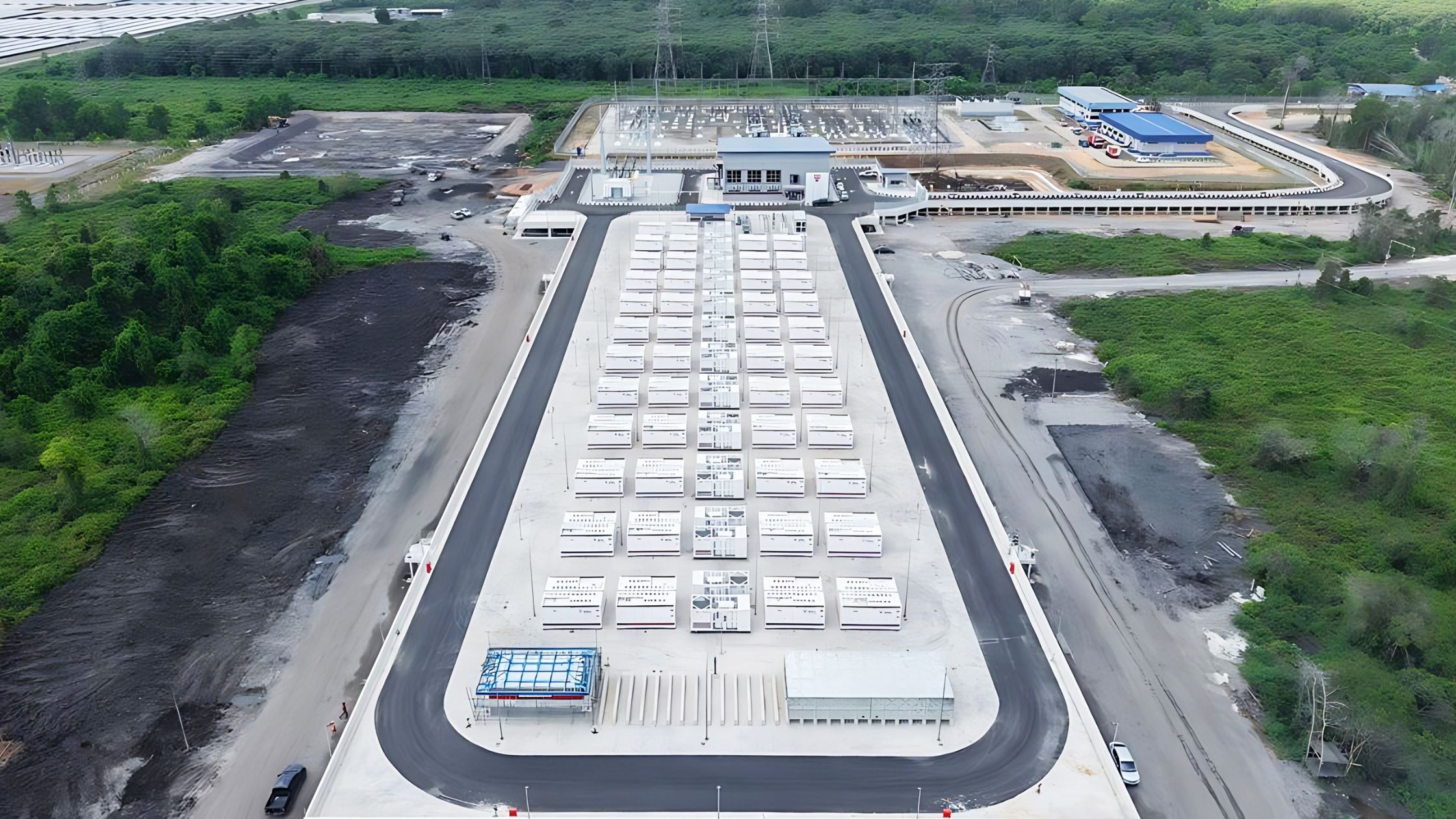
Sungrow has launched Malaysia's first grid-connected 100 MW/400 MWh Santong Battery Energy Storage System in Terengganu, developed by Tenaga Nasional Berhad. This project enhances grid resilience and renewable integration, achieving 88% efficiency.
Why it matters: If your utility-scale storage proposal doesn't include grid-forming capabilities, it's already a legacy asset in the eyes of grid operators.
Flick AI is a CRM for solar installers: the AI answers WhatsApp leads in seconds, builds proposals with automatic panel layouts and books the site visit. See how it works.
The Death of 'Dumb' Batteries
For years, Battery Energy Storage Systems (BESS) were essentially treated as giant, expensive sponges—soaking up excess solar and squeezing it back out when the sun went down. But this 100 MW / 400 MWh project in Malaysia signals a definitive shift toward grid-forming (GFM) capabilities. If you are a developer in Iberia or Italy, take note: 'grid-following' inverters are becoming a liability. As we strip away the rotational inertia of traditional coal and gas turbines, the grid becomes 'brittle.' Sungrow isn't just selling capacity here; they are selling stability.
The Virtual Synchronous Generator (VSG) Standard
The tech being deployed in Terengganu is likely a precursor to what we’ll see mandated by ENTSO-E across Europe. Grid-forming inverters act as a Virtual Synchronous Generator, meaning they can set the frequency and voltage of the grid rather than just mimicking it. For a Portuguese installer looking at a 5MW+ C&I project, this is the future. If your hardware partner—whether it's Sungrow, SMA, or Huawei—isn't offering robust GFM features, your project may face tougher interconnection hurdles or lower ancillary service revenues in the near future.
Efficiency vs. Resilience
The reported 88% round-trip efficiency (RTE) is respectable for a 4-hour duration system of this scale, but the real story is the deployment speed. Sungrow is positioning itself as the go-to for rapid-response utility projects. For European professionals, the lesson is simple: the hardware is maturing to the point where the 'risk' isn't the battery failing—it's the battery being too 'stupid' to participate in high-value frequency response markets. Don't buy a BESS today that can't provide synthetic inertia tomorrow; you'll be leaving money on the table as grid codes tighten.