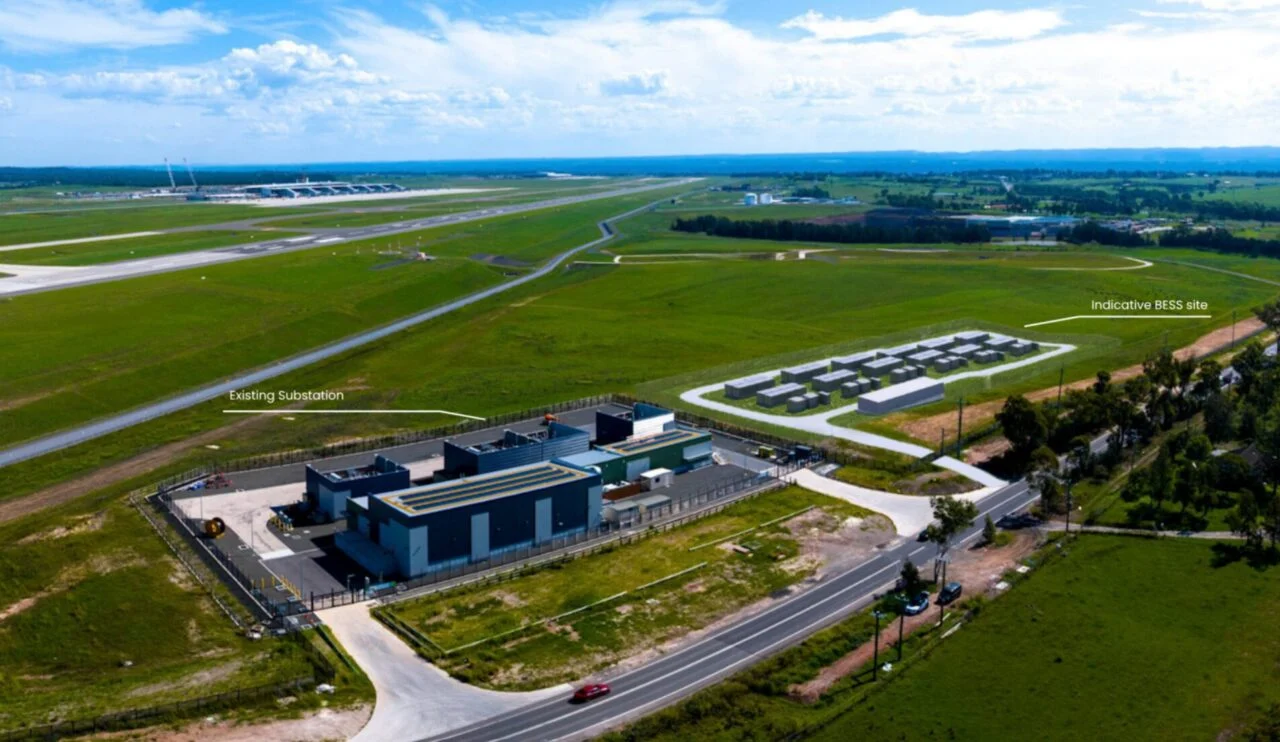
Australian renewables company CleanPeak Energy will develop a 9MWp rooftop solar PV system alongside 30MW/120MWh of battery energy storage for Western Sydney International (WSI) Airport in Australia.
Why it matters: The 4-hour storage duration is becoming the global standard for critical infrastructure; if your C&I designs aren't scaling BESS capacity to this level, you're leaving the most profitable part of the contract on the table.
Flick AI is a CRM for solar installers: the AI answers WhatsApp leads in seconds, builds proposals with automatic panel layouts and books the site visit. See how it works.
Look closely at those numbers. We aren't talking about a standard solar-plus-storage bolt-on. This is a 9MWp solar array paired with a 120MWh battery. That is a staggering 1:13 ratio of peak power to storage capacity. While European installers are still patting themselves on the back for selling a 100kWh cabinet to a local logistics hub, the Australians are building what is essentially a localized grid with a 4-hour discharge duration designed for 24/7 reliability.
The 'Deep Storage' Mandate
Why should a developer in Lisbon or Frankfurt care? Because infrastructure projects like Western Sydney International are the 'ghost of Christmas future' for European aviation. Under the EU’s ReFuelEU Aviation and the broader Fit for 55 package, airports are being squeezed to electrify everything from ground support equipment to heating. If you think you’re going to power a modern airport's peak evening load with a 1-hour duration battery, you’re dreaming. This project uses CATL or potentially Tesla Megapack-scale density to prove that the PPA (Power Purchase Agreement) of the future isn't about 'when the sun shines'; it's about 'whenever the terminal is open.'
Stop Selling Solar, Start Selling Firmness
We need to stop pitching 'offsetting electricity bills' and start pitching 'energy independence for critical infrastructure.' If you’re bidding on a C&I project for a hospital, a data center, or a regional transport hub in Iberia, use this ratio as your benchmark. A 15-year deal like CleanPeak’s isn't won on the lowest price per watt; it’s won on the Levelized Cost of Storage (LCOS) and the ability to guarantee 100% renewable uptime. If your lead engineer isn't comfortable sizing a 4-hour BESS, you’re going to lose these high-margin 'trophy' projects to utility players who treat solar as merely a fuel source for their batteries.