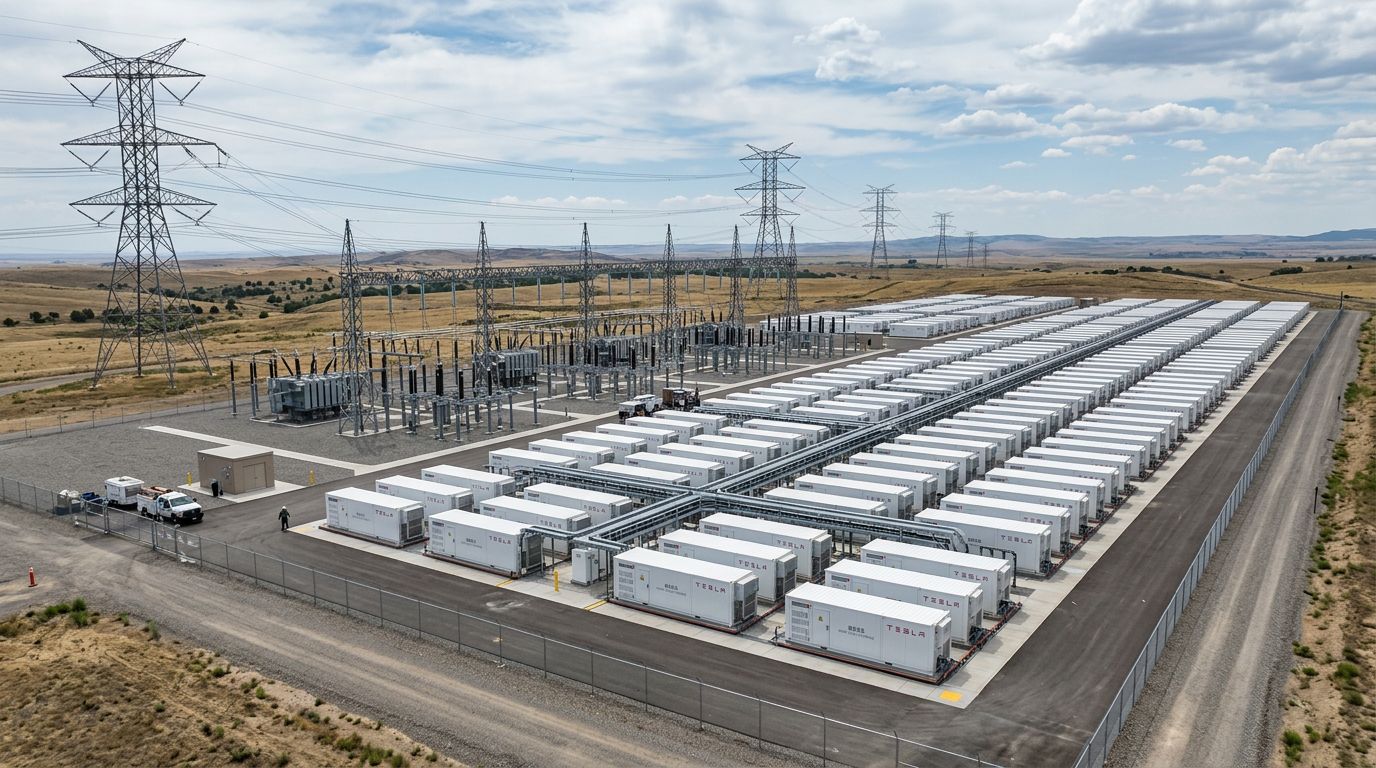
Researchers developed a high-performance computing framework to simulate battery degradation, showing that operating conditions and system design influence battery health.
Why it matters: The era of 'guesstimating' battery lifespan is over; precise degradation modeling is becoming a requirement for securing project financing and long-term O&M contracts.
Flick AI is a CRM for solar installers: the AI answers WhatsApp leads in seconds, builds proposals with automatic panel layouts and books the site visit. See how it works.
We’ve all been there: a manufacturer hands you a datasheet promising 6,000 cycles at 80% Depth of Discharge (DoD), and you build a 15-year financial model around it. But in the field, batteries don’t live in a vacuum. They live in the heat of a Portuguese summer or the damp of a Dutch winter, cycling sporadically for frequency response. This Oak Ridge National Laboratory (ORNL) study is the technical proof of what experienced field engineers have long suspected: standardized cycle-life ratings are practically useless for real-world O&M budgeting.
The Arbitrage vs. FCR Trap
For European developers, the "operating conditions" mentioned in the study aren't just about temperature; they're about the stack of services you're running. If you’re chasing high-margin Frequency Containment Reserve (FCR) or aFRR in markets like Germany or the Nordics, your battery is performing micro-adjustments constantly. This ORNL simulation framework suggests that these high-frequency, low-amplitude cycles degrade the chemistry in ways traditional linear models fail to capture. We’re moving away from "Calendar Life" toward a sophisticated "Duty Cycle" analysis.
The Bankability Factor
Why should an installer care about high-performance computing? Because the banks care. As the EU’s Battery Passport regulations loom, and as project financing for BESS becomes more competitive, the ability to prove a specific degradation curve based on local grid conditions will be the difference between a 4% and a 7% interest rate. If you are selling C&I storage to a factory in Valencia, you need to show them how that 1MW/2MWh system will actually look in 2032, not what it looked like in a controlled lab in Shenzhen.