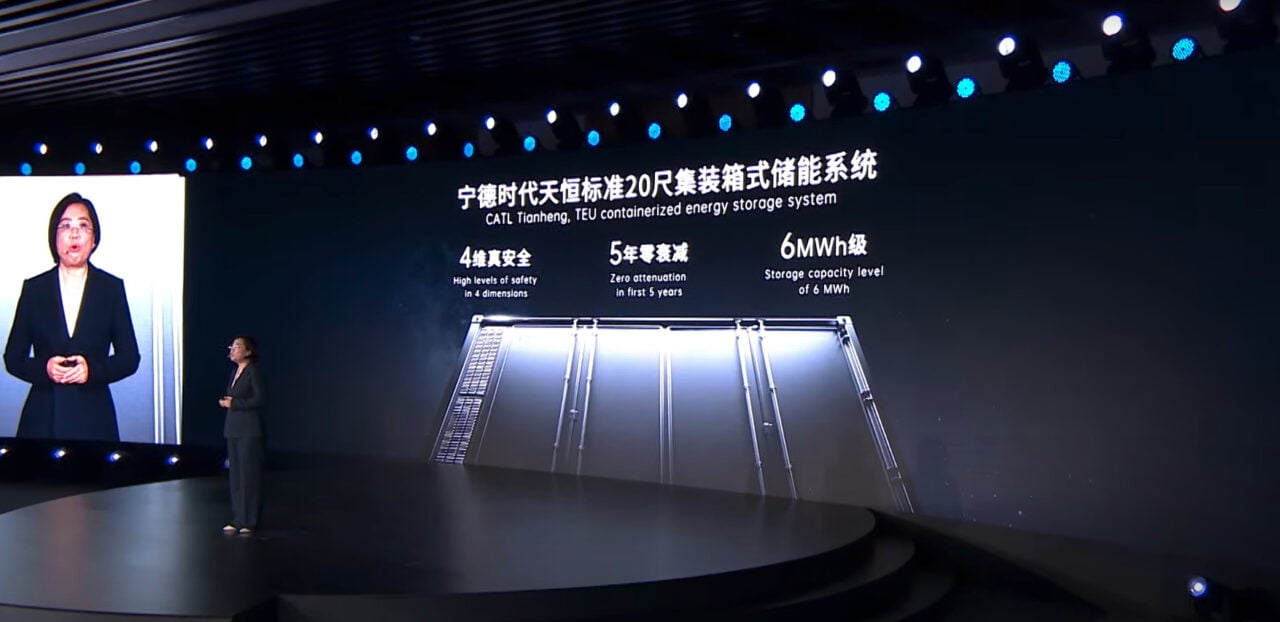
CATL claimed the system can achieve zero degradation in capacity and power over the first five years of its use.
Why it matters: Higher density means fewer containers and lower BoS costs, but don't stake your reputation on 'zero degradation' without reading the warranty's thermal fine print.
Flick AI is a CRM for solar installers: the AI answers WhatsApp leads in seconds, builds proposals with automatic panel layouts and books the site visit. See how it works.
The Thermodynamics of a Marketing Claim
Let’s be clear: physics hasn’t been repealed. Every time an electron moves through a lithium-ion cell, something wears out. However, CATL’s Tener system, boasting zero capacity fade over the first five years, isn't just magic—it’s a masterclass in chemical padding and SEI (Solid Electrolyte Interphase) management. By using 'biomimetic' SEI layers and high-consumption lithium compensation, CATL is effectively over-provisioning the cells so the measurable output remains flat while the internal chemistry absorbs the initial hit.
Why the 6.25MWh Benchmark Changes Your Next C&I Bid
If you’re a developer in Portugal or Spain looking at a 20ft container footprint, the standard has been 3.7MWh to 5MWh. CATL is pushing 6.25MWh into that same 20ft box. That is a massive jump in energy density (430Wh/L). For an installer, this isn't just about 'more power'; it’s about reducing the Balance of System (BoS) costs. If you can hit your MWh target with 30% fewer containers, you’re spending less on pads, less on cabling, and significantly less on site labor. In a market where EPC margins are being squeezed to 5-8%, that footprint efficiency is your only real lever left.
The Warranty Trap
I’ve seen this movie before. Manufacturers promise the moon to capture market share, then the fine print in the O&M contract clarifies that 'zero degradation' only applies under laboratory-perfect ambient temperatures and C-rates that no real-world grid-balancing project actually follows. If you are spec’ing Tener for a client, look at the degradation curve from year 6 to 20. If the cliff is steep after that five-year honeymoon, your client’s NPV (Net Present Value) calculation is a ticking time bomb. Don't sell a 'maintenance-free' dream; sell a superior density reality.