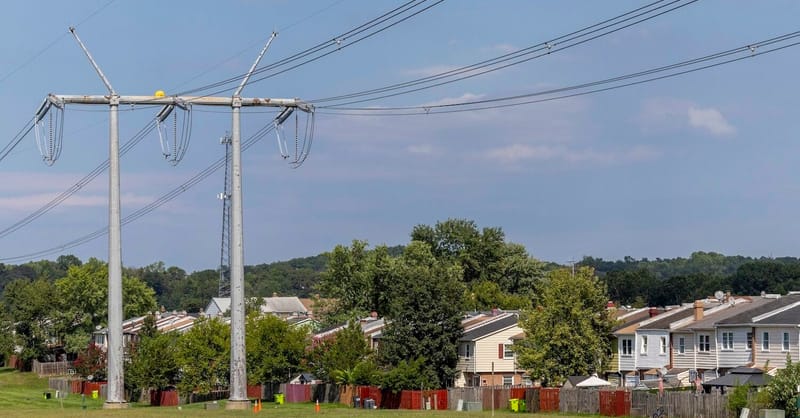
With the conclusion of its latest capacity auction, PJM Interconnection has once again shown that its process for securing new energy is unable to keep up with the wave of electricity demand from data centers.
Why it matters: Data center demand is breaking traditional grid planning; use this as the ultimate sales leverage for onsite storage and private-wire C&I projects.
Flick AI is a CRM for solar installers: the AI answers WhatsApp leads in seconds, builds proposals with automatic panel layouts and books the site visit. See how it works.
If you think the grid connection queue in Iberia or the Netherlands is a headache, look at what just happened in the PJM market. Capacity prices for 2025/2026 skyrocketed from $28.92/MW-day to $269.92/MW-day. That is a nearly 10x increase in the cost of simply ensuring power is available. Why? Because the 'Data Center Alley' in Virginia is devouring electrons faster than PJM can approve interconnection agreements.
The 'FLAP' Market Mirror
For European installers, this isn't just 'American drama.' We are seeing the exact same physics play out in the FLAP markets (Frankfurt, London, Amsterdam, Paris) and increasingly in Madrid and Sines. When a grid operator like Red Eléctrica or TenneT fails to streamline the 'Ready-to-Build' (RTB) pipeline, the market eventually prices in the scarcity. In PJM, the failure was a mix of retiring coal plants and a 3,000% increase in data center load projections. In Europe, our bottleneck is 'paperwork' and transformer availability.
We've seen this pattern before in the early 2010s with German feed-in tariffs—the infrastructure is the last thing to move. Smart developers in Portugal and Spain should stop pitching 'cheap energy' and start pitching 'guaranteed uptime.' When the capacity market breaks, the person with the 5MW onsite battery and a private wire is the only one who keeps the lights on without going bankrupt.