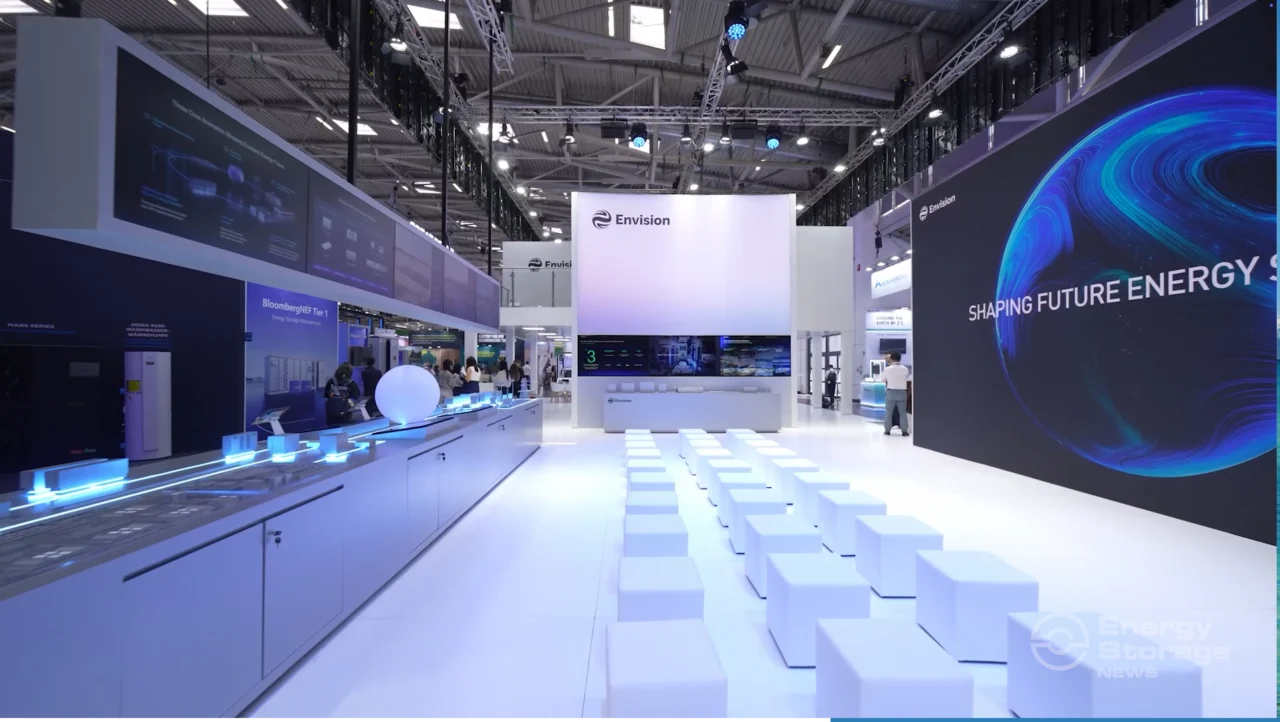
We caught up with Michael Koller, Solutions Director for Europe and the UK with Envision Energy, at this year’s Smarter E Europe trade show in Munich.
Why it matters: The shift from 'passive' to 'active' grid participation means your next BESS project must be software-intelligent and grid-forming to avoid being locked out of lucrative ancillary service markets.
Flick AI is a CRM for solar installers: the AI answers WhatsApp leads in seconds, builds proposals with automatic panel layouts and books the site visit. See how it works.
If you’re still thinking of a Battery Energy Storage System (BESS) as just a massive chemical bucket to shift energy from noon to 7 PM, you’re already behind the curve. Envision Energy’s push into grid-forming technology and AI integration isn’t just trade show posturing; it’s a direct response to the increasing instability of the European synchronous grid as we retire fossil fuel spinning reserves.
The Grid-Forming Requirement
For project developers in markets like the UK, Ireland, or the edges of the Iberian peninsula, grid-forming inverters are transitioning from a 'nice-to-have' to a regulatory necessity. Unlike traditional grid-following inverters that wait for a signal to sync with, grid-forming units (like those Envision is scaling) can effectively act as a voltage source. This is critical for maintaining system inertia. If you are bidding on utility-scale or large C&I tenders this year, your ability to provide 'black start' capabilities and synthetic inertia is what will separate a winning bid from a rejected one.
AI is the New Margin Protector
We’ve seen the race to the bottom on LFP cell prices. When hardware is a commodity, the software—specifically AI-driven platforms like Envision's EnOS—becomes the profit engine. For an installer or asset manager, the 'AI' label usually triggers a healthy dose of skepticism. However, in the context of revenue stacking, it’s a math problem. You can no longer survive on arbitrage alone. You need to juggle FCR (Frequency Containment Reserve), mFRR (manual Frequency Restoration Reserve), and local congestion management simultaneously. Doing this manually is a suicide mission for your ROI; algorithmic trading is now the entry price for the European BESS market.