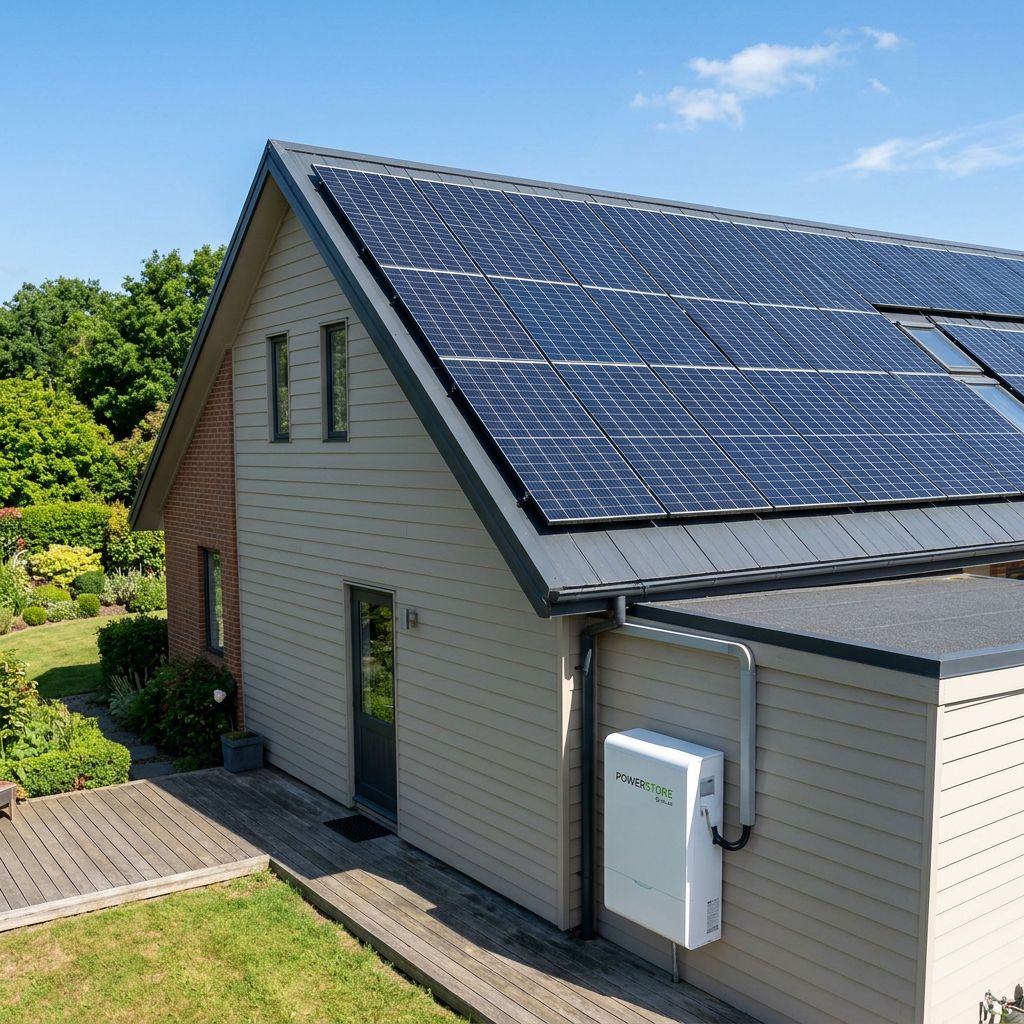
South Africa's municipal electricity sector faces significant challenges like rising costs, aging infrastructure, and load shedding, jeopardizing economic growth.
Why it matters: South Africa is the world's stress-test lab for decentralized energy; the hardware and microgrid models proven there today are your high-margin C&I sales of tomorrow.
Flick AI is a CRM for solar installers: the AI answers WhatsApp leads in seconds, builds proposals with automatic panel layouts and books the site visit. See how it works.
While European installers might look at South Africa’s 'load shedding' as a distant problem of a crumbling utility, the economic engine driving their shift to decentralized solar and BESS is identical to what we are seeing in Portugal, Spain, and Italy. In South Africa, the motivation is survival; in Europe, it’s about escaping the volatility of the wholesale market and the rising absurdity of negative pricing.
The 'Island Mode' Business Case
The South African model is moving toward what I call 'Islanded Municipalities.' Instead of relying on a centralized behemoth like Eskom—which is drowning in R400 billion of debt—local councils are realizing that every kilowatt-hour generated on a residential rooftop is a kilowatt-hour they don't have to buy at a premium. For an Iberian installer, this is the perfect blueprint for Comunidades de Energia Renovável (CER). The technology stack being refined in SA—heavy-duty hybrid inverters and LFP batteries—is exactly what you should be pitching to C&I clients who are terrified of the next energy price spike.
The real money isn't in the panels anymore; it's in the control logic that manages the battery. South Africa is proving that software-defined power is more reliable than copper-heavy infrastructure. If you're not talking to your local business park about microgrids yet, you're leaving the most lucrative part of the energy transition to the big utilities who are already too slow to react.