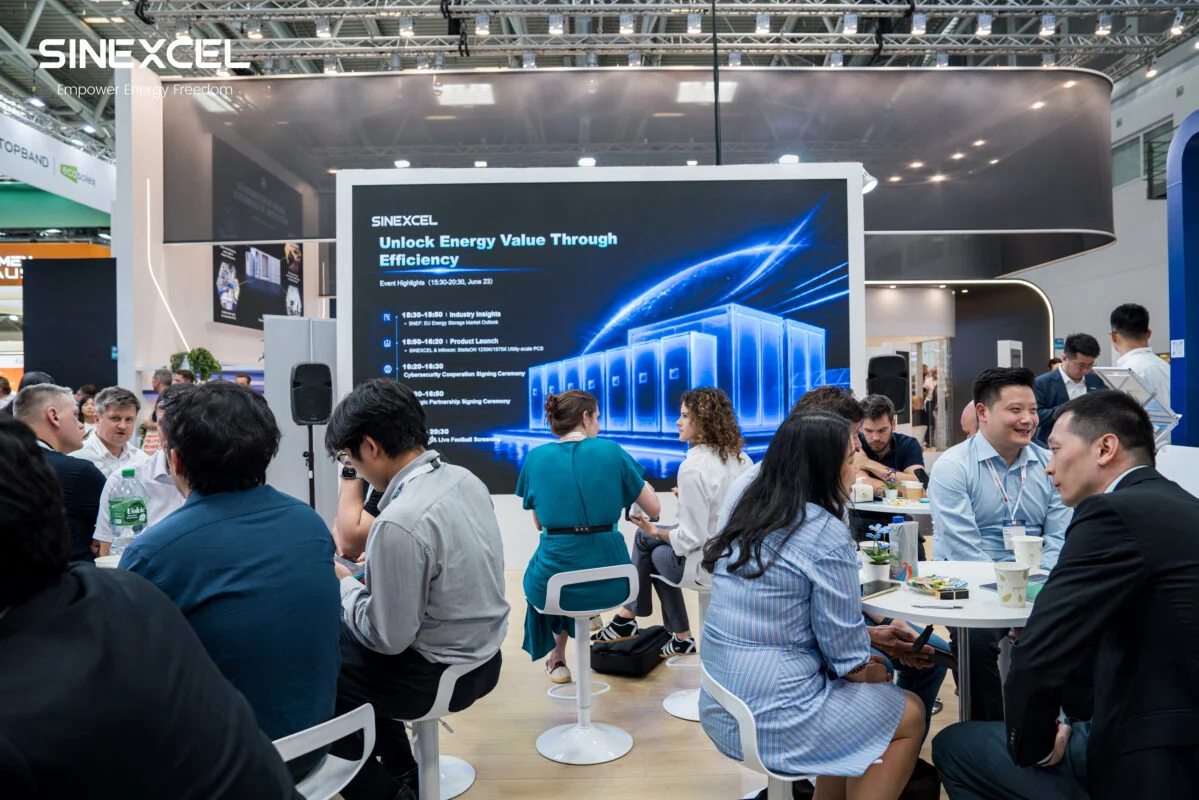
SINEXCEL’s Luke Lu discusses grid-forming power conversion systems, noise constraints and O&M as the company builds its presence in Europe.
Why it matters: Grid-forming tech is becoming a mandatory requirement for ancillary service revenue; ignore it and your BESS project loses half its potential ROI.
Flick AI is a CRM for solar installers: the AI answers WhatsApp leads in seconds, builds proposals with automatic panel layouts and books the site visit. See how it works.
The 'Synthetic Inertia' Arms Race
If you're still pitching grid-following BESS for utility-scale projects, you're building a legacy asset that will be obsolete before the commissioning party is over. Grid-forming Power Conversion Systems (PCS) are moving from a 'nice-to-have' feature in remote microgrids to a hard requirement for ENTSO-E compliance in weak grid pockets. Sinexcel’s push here is a signal that the tier-2 manufacturers are finally chasing the high-margin stability markets previously dominated by the likes of SMA or Hitachi Energy.
The Silent Killer: Noise Ordinances
Luke Lu mentions noise constraints, and for good reason. I’ve seen projects in the Netherlands stalled for six months because the cooling fans on a 2MW PCS sounded like a jet engine at 2 AM, violating local residential decibel limits. European installers need to look past the peak efficiency numbers and check the dBA ratings at 10 meters. If Sinexcel can deliver grid-forming stability without the acoustic profile of a rock concert, they have a chance. If not, they’re just another container taking up space in a warehouse.
The O&M Credibility Gap
O&M isn't about a slick dashboard; it's about whether a technician with a spare PCB shows up in 48 hours when a capacitor pops during a 40-degree Spanish summer. For a developer in Iberia, the lower CAPEX of a Sinexcel unit is tempting, but the risk remains the 'ghost support' phenomenon. Unlike Huawei or Sungrow, who have built massive European service hubs, smaller PCS players still have to prove they aren't just selling boxes and disappearing. In the utility game, your margin is protected by uptime and Frequency Containment Reserve (FCR) availability, not the initial discount on the hardware.