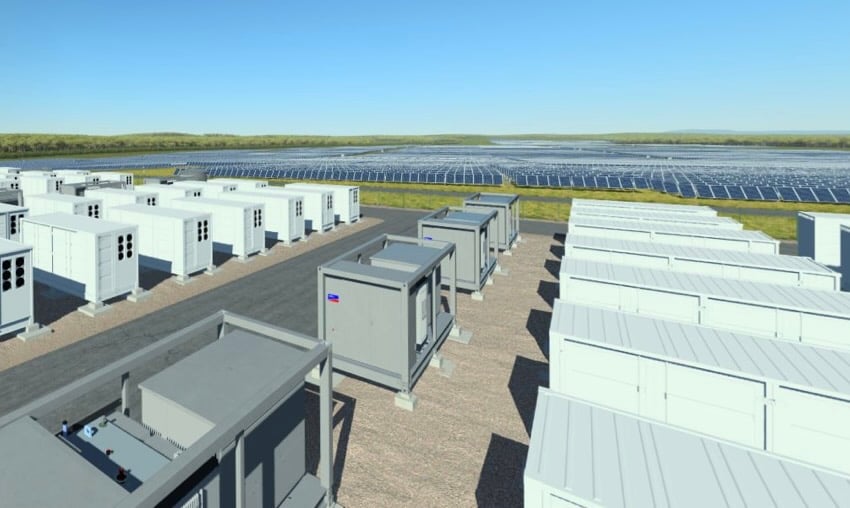
Ark Energy has secured a financial investment decision (FID) for its AU$1.3 billion Richmond Valley solar-plus-storage project in Australia.
Why it matters: Australia is the world's most aggressive solar test lab; if they’ve stopped building solar without storage, your European projects are about 18 months behind the same fate.
Flick AI is a CRM for solar installers: the AI answers WhatsApp leads in seconds, builds proposals with automatic panel layouts and books the site visit. See how it works.
If you’re a developer in Portugal or Spain looking at this AU$1.3 billion (approx. €800 million) ticket and thinking "that’s a long way away," you’re missing the forest for the eucalyptus trees. Ark Energy—a subsidiary of Korea Zinc—isn't just building solar; they are building a firm power plant. In Australia, the solar-only utility-scale model is effectively dead due to a savage "duck curve" that makes mid-day prices go negative more often than not. Sound familiar? It should. We saw the same ghost of Christmas future in the Iberian market last April when spot prices hit zero for over 100 hours.
The "Baseload Solar" Blueprint
The Richmond Valley project is the blueprint for what your European pipeline will look like by 2026. You can no longer bank on the spot market for PPA (Power Purchase Agreement) bankability without a massive lithium-ion buffer. In the EU, we’re seeing the same pressure from the Electricity Market Design (EMD) reforms, which push for increased grid flexibility. If you aren't already pricing 2-to-4-hour BESS (Battery Energy Storage Systems) into your 50MW+ EPC bids, your IRR projections are essentially fiction.
For the European installer, the message is clear: the hardware is cheap, but the timing of delivery is where the profit sits. If you're still selling solar-only solutions to industrial clients without discussing how they’ll avoid peak-hour grid charges, you're leaving the highest-margin part of the deal for your competitors.