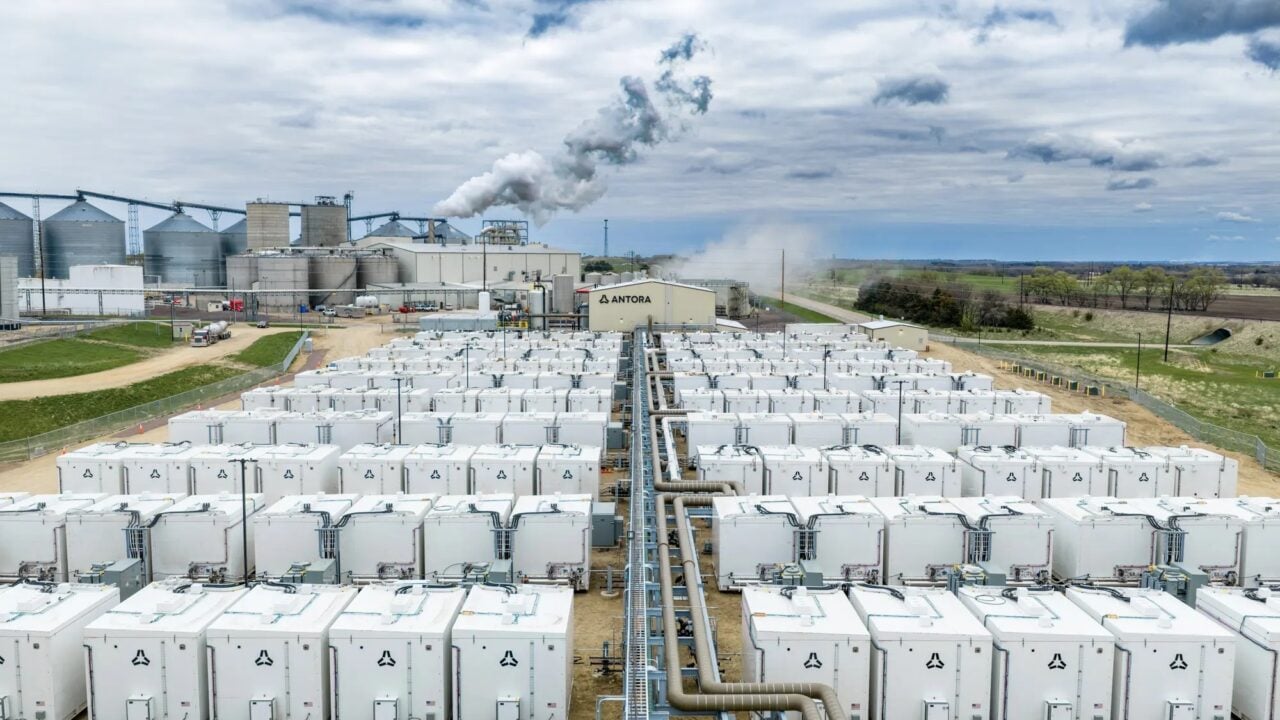
Thermal energy storage (TES) technology provider Antora Energy has closed a US$550 million Series C funding round to accelerate deployment of its thermal battery storage systems for industrial facilities and data centres in the US.
Why it matters: Industrial heat is the 'final boss' of decarbonization; if you can bundle PV with thermal storage, you move from being a simple contractor to a strategic energy partner.
Flick AI is a CRM for solar installers: the AI answers WhatsApp leads in seconds, builds proposals with automatic panel layouts and books the site visit. See how it works.
Stop looking at lithium-ion for every storage problem. If you’re a developer working the C&I circuit in Europe, Antora’s $550 million Series C isn’t just another US venture round—it’s a neon sign pointing to where the real money is hiding: industrial process heat.
The Thermodynamics of Your Next Commission
We’ve spent the last decade fighting for pennies on the MWh in the electricity market. Meanwhile, the industrial giants in the Ruhr Valley or the ceramic clusters in Castellón are burning gas to get heat. Lithium-ion is a joke for high-grade industrial heat; the physics don't scale. Antora’s approach—heating carbon blocks to over 1,500°C—solves the 'intermittency problem' for a factory that needs 24/7 steam but only has 8 hours of peak PV.
When a company like Antora raises half a billion dollars, the 'bankability' conversation changes overnight. For an installer in Portugal or Germany, this means the 'Solar-plus-Heat' pitch just got 10x easier. You aren't just selling a roof full of JinkoSolar panels to offset a lighting bill; you’re selling the feedstock for a thermal battery that replaces a fossil-fuel boiler.
While Antora is currently scaling in the US, European competitors like EnergyNest and Kyoto Group are watching this capital injection closely. It validates the asset class. If you aren't talking to your industrial clients about heat-as-a-service yet, someone else will walk into that boiler room with a thermal storage proposal while you're still debating inverter clipping ratios.