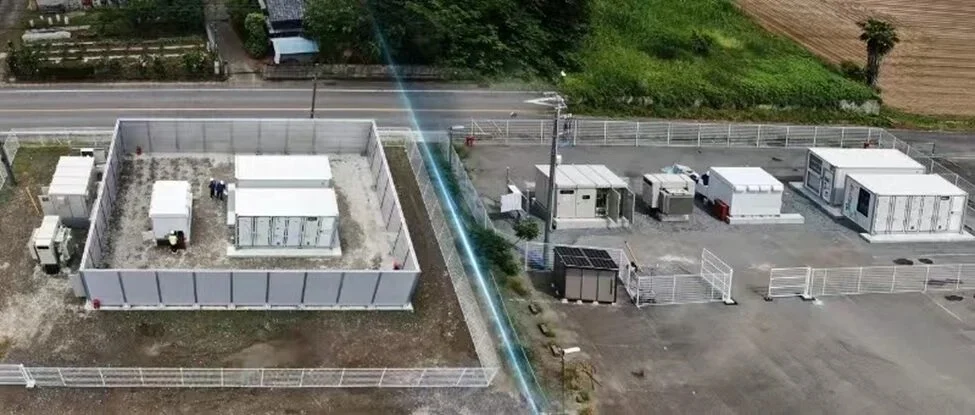
Trina Storage, the battery storage arm of major Chinese solar PV company Trinasolar, has signed a 1GWh MoU to supply products in Japan.
Why it matters: Massive Asian MoUs signal where the hardware is flowing; if you don't lock in your BESS allocations now, you'll be fighting for scraps when EU storage demand peaks.
Flick AI is a CRM for solar installers: the AI answers WhatsApp leads in seconds, builds proposals with automatic panel layouts and books the site visit. See how it works.
Let’s be honest: in this industry, an MoU (Memorandum of Understanding) is often just a press release looking for a purpose. However, when a vertically integrated giant like Trina Storage puts a 1GWh number on a piece of paper for the Japanese market, European installers should stop scrolling and look at their own procurement sheets.
The Supply Chain Gravity Well
Japan is notoriously difficult to penetrate. Their “unique technical requirements” usually translate to obsessive fire safety standards and hyper-specific grid-forming capabilities. If Trina is engineering their Elementa 2 platform—or a derivative of it—to satisfy Japanese regulators, that high-spec hardware will eventually become the baseline for the C&I systems you’re quoting in Lisbon or Munich. But there’s a catch. Every GWh committed to a massive utility-scale project in Hokkaido is a GWh that isn't sitting in a warehouse in Rotterdam or Valencia.
The 'Rounding Error' Problem
For a developer in Iberia looking for a 500kWh or 2MWh BESS, this news is a double-edged sword. On one hand, Trina’s massive scale drives down the LCOE (Levelized Cost of Storage). On the other hand, it reinforces a dangerous trend: the “Big Three” (Trina, Sungrow, BYD) are increasingly chasing gigawatt-scale whale deals. When you have a technical glitch on a 50MW project in the Alentejo, and Trina’s support desk is busy navigating a 1GWh rollout in Japan, you quickly realize that your margin is less important to them than their Tier 1 status. We’ve seen this pattern with module supply in 2021; don't think storage will be different.
Practical Strategy for 2024
If you are building your business on Trina hardware, you need to demand firm delivery slots, not just price estimates. As the EU Battery Regulation (2023/1542) begins to bite with carbon footprint declarations, manufacturers will prioritize markets with the lowest friction. If Japan offers a path of least resistance for 1GWh of capacity, the EU’s complex recycling and ESG reporting might push us further down the priority list. Diversify your inverter/PCS partnerships now so you aren't held hostage by a single manufacturer’s global shipping schedule.